Can You Plaster Over Old Plaster? What Bridgwater Homeowners Need to Know
Wondering if you can plaster over old plaster in your Somerset or Dorset home? We explain when it works, when it doesn't, and what we do instead.
Can You Plaster Over Old Plaster? The Straight Answer
Old plaster on a wall does not automatically mean the whole lot needs to come off. In a lot of homes across Somerset and Dorset, from post-war semis and terraces to older period properties around Bridgwater, the existing plaster is still sound. With the right preparation, you can skim straight over it.
But there is a catch. "Old plaster" covers a huge range of conditions. Some is solid, just tired-looking and a bit rough. Some is hollow in patches, crumbling at the edges, or has been soaked by a leak at some point. The answer to "can I plaster over it?" depends almost entirely on what state it is actually in.
This guide walks you through how we assess old plaster, what we do when it is fine to go over, and when we recommend stripping back instead.
How We Check Whether Old Plaster Is Worth Keeping
Before we quote for any re-skim, we check the walls properly. A few simple checks tell us most of what we need to know.
The tap test. Knock firmly across the whole surface with your knuckles. Solid plaster gives a dull thud. A hollow, drum-like sound means the plaster has lifted away from the wall behind it. Those hollow patches will not bond properly with a fresh skim and are likely to crack or fall away later.
Look for movement and cracks. Fine hairline cracks are not usually a problem. Wide cracks, cracks that are wider at one end than the other, or cracks that keep reopening are worth investigating before you skim over them.
Check for moisture. Damp or staining needs to be sorted before any plastering work. We do not carry out damp proofing ourselves, but we will always flag it clearly so you can get the right trade in first. Skimming over a damp wall just traps the problem.
Feel the surface. Old lime plaster and old sand-and-cement backgrounds have different textures and absorbency. Knowing what you are dealing with helps us choose the right preparation.
If the plaster passes those checks, we can work with it. If it fails, the honest advice is to take it off.
When Plastering Over Old Plaster Works Well
A standard re-skim is one of the most common jobs we carry out. It suits:
- Walls and ceilings that are sound but have a rough, tired or patchy finish
- Rooms that have had wallpaper stripped, leaving a slightly uneven surface
- Older properties where the original plaster is still firmly keyed to the wall
- Rooms being refreshed before redecorating
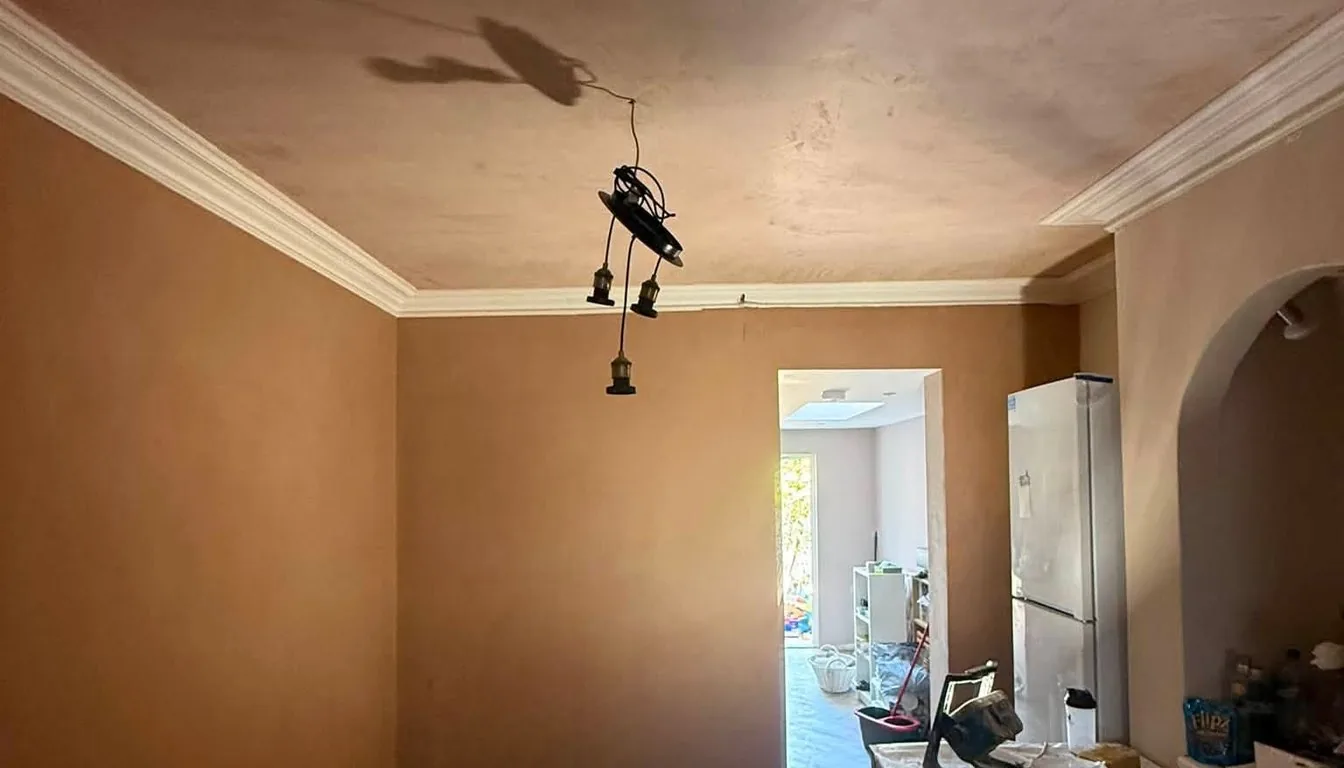
The process is straightforward. We clean the surface down, fill any minor cracks or holes, and apply a bonding agent to control the suction and give the new skim something to grip. Then we apply a thin finish coat of plaster and trowel it up smooth.
Done properly over sound old plaster, a re-skim gives you a smooth, durable finish. It is also faster and less disruptive than stripping a room back, which matters if you are living in the property.
When the Old Plaster Needs to Come Off
There are situations where we will always recommend stripping back before replastering. Cutting corners here causes problems further down the line, and we would rather be straight with you upfront.
Strip the old plaster if:
- Large areas sound hollow on the tap test
- There is a history of damp or water getting in that has not been fully resolved
- The plaster is soft, crumbling or powdery when you press it
- There are layers of different materials that are no longer bonded together
- Tiles have been removed and taken chunks of the plaster face with them
Stripping back to the brick or block is more disruptive and adds time to a job, but it gives you a clean start. The wall is then built back up with a backing coat and finished with a skim, depending on what's underneath.
Do You Need a Mist Coat on Old Plaster?
This question comes up a lot and it is worth being clear about it. A mist coat is a decorating step, not a plastering one. It is a watered-down emulsion applied to new or freshly skimmed plaster to seal it before you decorate properly.
If you are painting directly onto old plaster that has never been skimmed, a mist coat can still help seal the surface. If we have just re-skimmed over your old plaster, the new skim needs to dry fully before you paint, and a mist coat should be your first step once it has.
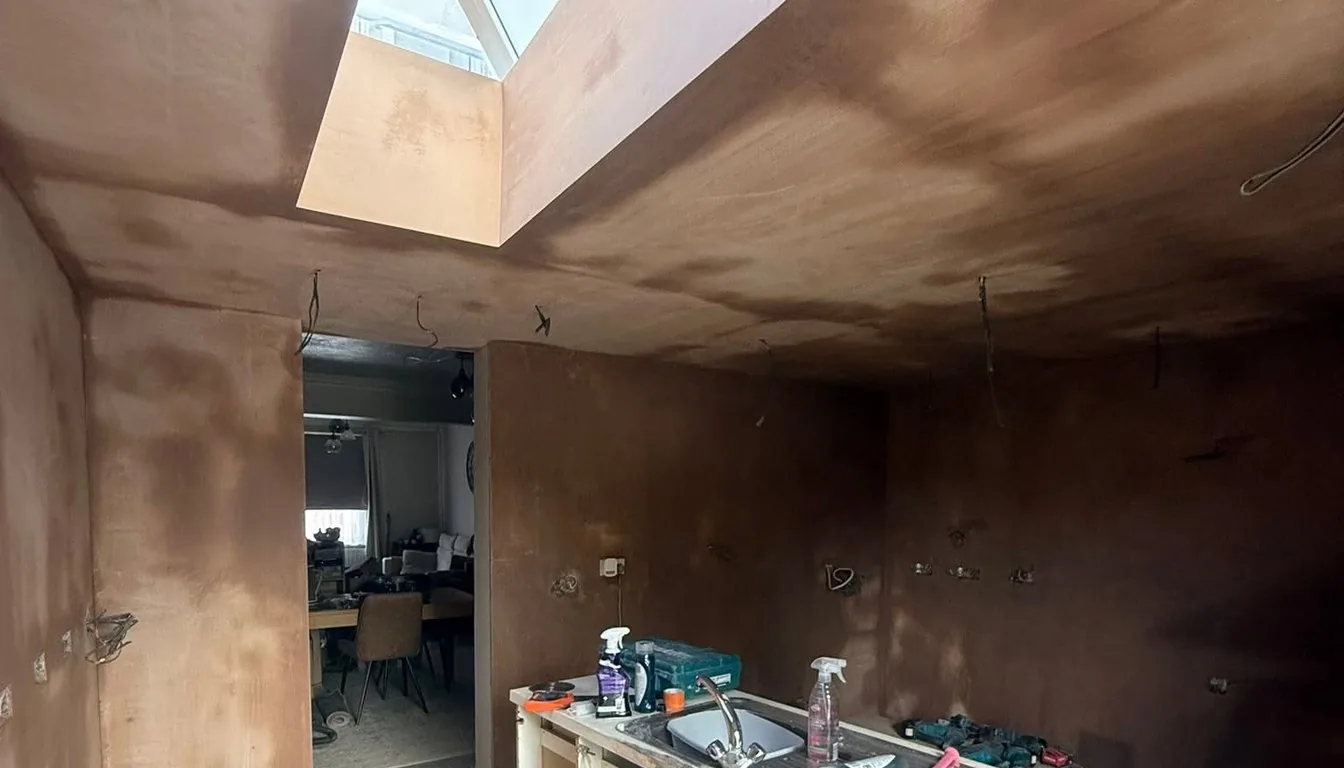
Fresh plaster goes on dark and dries to a pale, even colour as the moisture leaves. That is your visual cue that it is ready for the decorator, and we'll always tell you what to look for.
What About Covering Up Uneven or Damaged Plaster Walls?
Sometimes the goal is not a full re-skim but simply a better-looking surface. There are a few options depending on the situation.
Patch and skim. If only certain areas are damaged, we can cut out the bad sections, patch them back up, and skim the whole wall so the patches disappear. This is often the least disruptive approach.
Plasterboard over the top. Where walls are very uneven, badly cracked or have layers built up over the years, it can be quicker and cleaner to fix plasterboard over the top (the dot and dab method) and skim the boards. This gives a flat surface without the mess of stripping.
Full replaster. For rooms in very poor condition, a full strip and replaster is the right call. It takes longer, but you start from a sound base.
We will always give you an honest steer on which approach makes sense for your walls.
What One of Our Customers Found
Plastering can feel like a bit of a mystery if you have never had it done before. Here is what one customer said after a walls-and-ceiling job:
"Great job, walls and ceiling done in a couple of days and are smooth and soft and 100% better than before" — Charisma England, via Google
A good plasterer should be able to explain what they are doing and why, not just turn up and get on with it. If you are unsure whether your walls need a skim, a full replaster or something else entirely, just ask us. We are happy to talk it through before you commit to anything.
Frequently Asked Questions
Do I need to remove old plaster before plastering?
Not always. If the existing plaster is solid, well-bonded and free from damp, we can skim straight over it. We tap-test and inspect the walls first. If the plaster is hollow in patches, crumbling or has been affected by moisture, stripping back and starting fresh gives a much better result.
Do I need a mist coat on old plaster before decorating?
If you are painting directly onto bare plaster, a mist coat of watered-down emulsion, mixed as the paint maker recommends, helps seal the surface and stops your topcoat soaking in unevenly. If we have just applied a fresh skim, let it dry fully first, then use a mist coat as your first layer of paint. We will tell you when it is ready.
What are the options for covering up bad plaster walls?
It depends on how bad. Minor damage can usually be patched and skimmed. Walls that are very uneven or have several failing layers can be boarded over and skimmed, which is often quicker than stripping. For walls in genuinely poor condition, a full strip-out and replaster is the most reliable fix. We will advise on the most practical option once we have had a look.
Can a plasterer sort just one wall or a small area?
Yes. We work on all sizes of job, from a single patched wall or one ceiling to a whole house. If you have one wall that has taken damage or a ceiling that needs freshening up before you decorate, get in touch for a straightforward quote.
Get a Straight Answer About Your Walls
If you are not sure whether your old plaster can be skimmed over or needs to come off, the quickest way to find out is to have someone take a look. We cover Bridgwater and the wider Somerset and Dorset area, and quotes are free.
Get in touch with us for a free quote or call us on 07444 745495. No pressure, just a straight answer about what your walls actually need.