 James Plastering & Rendering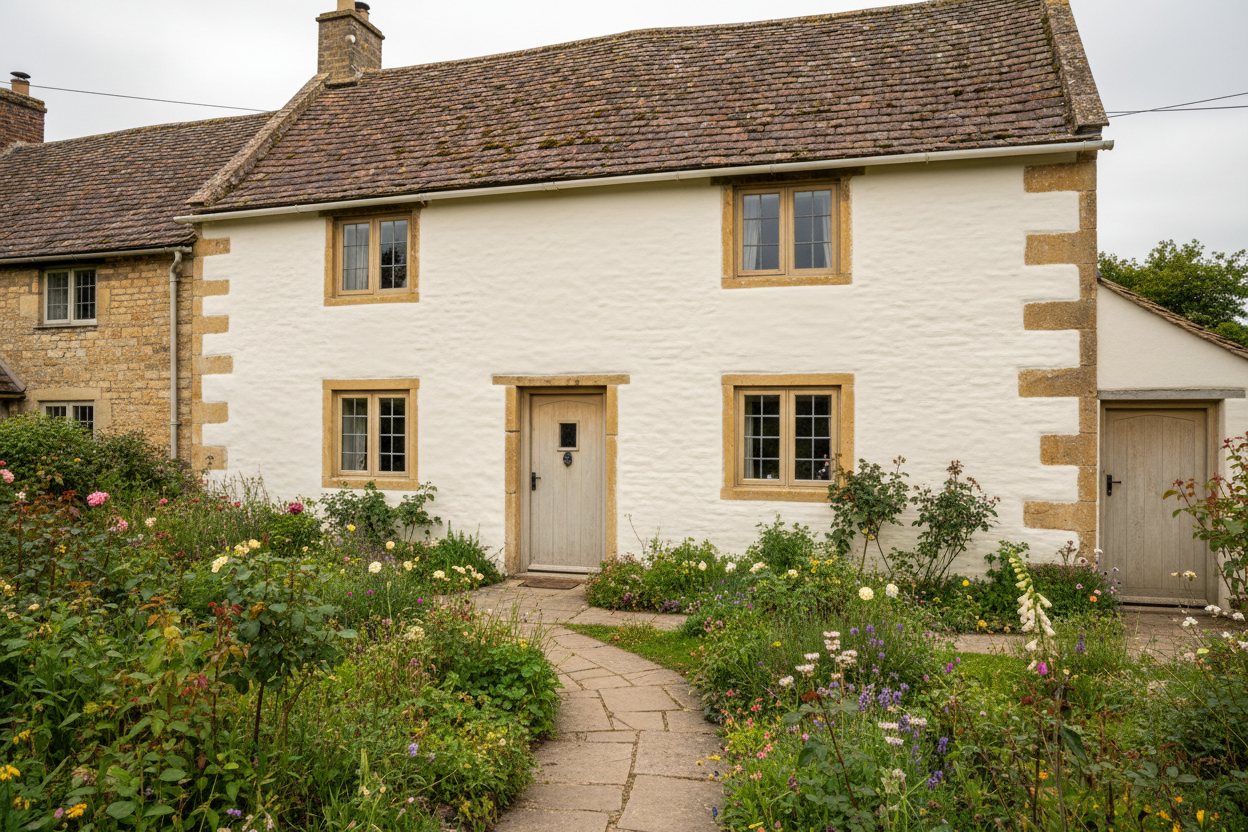
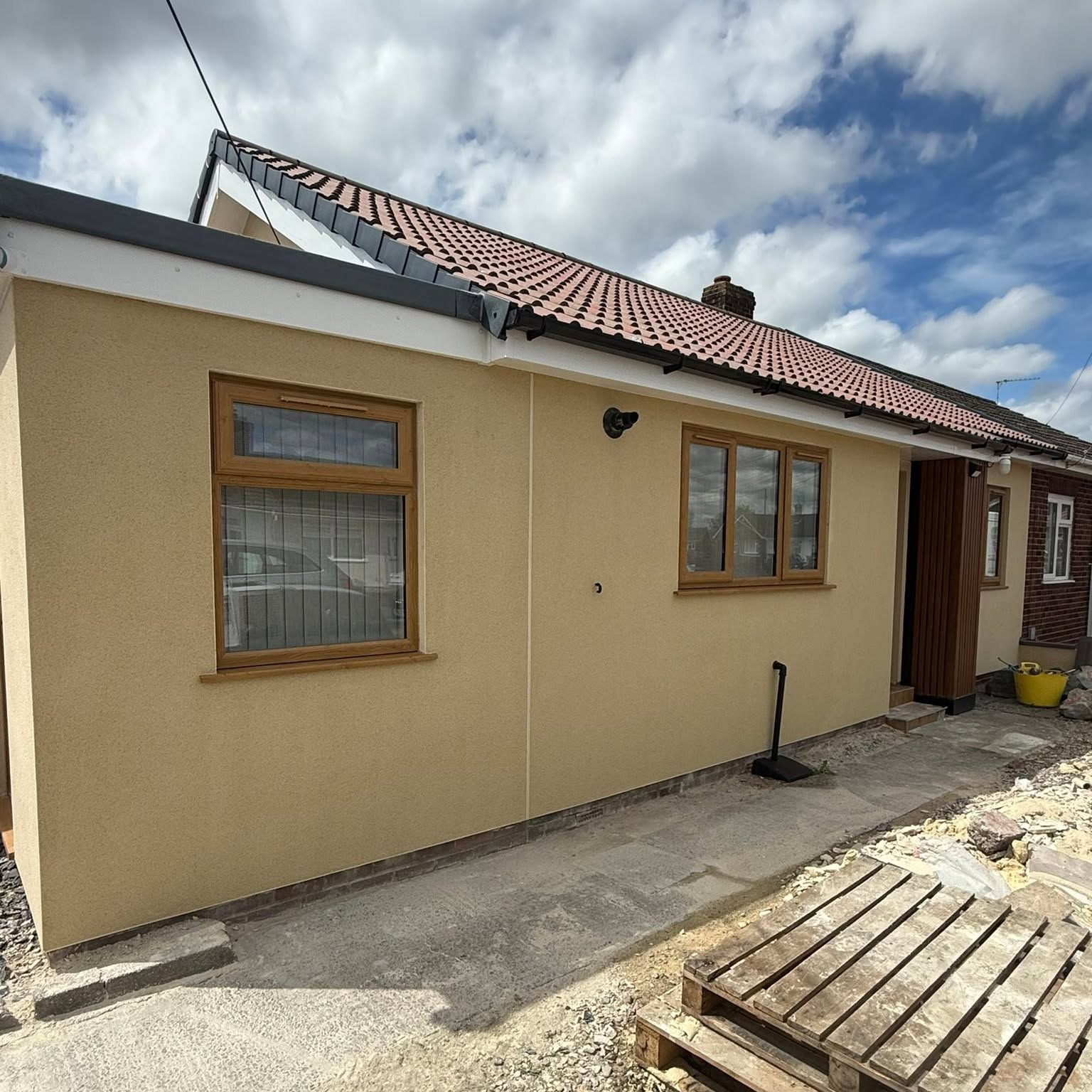
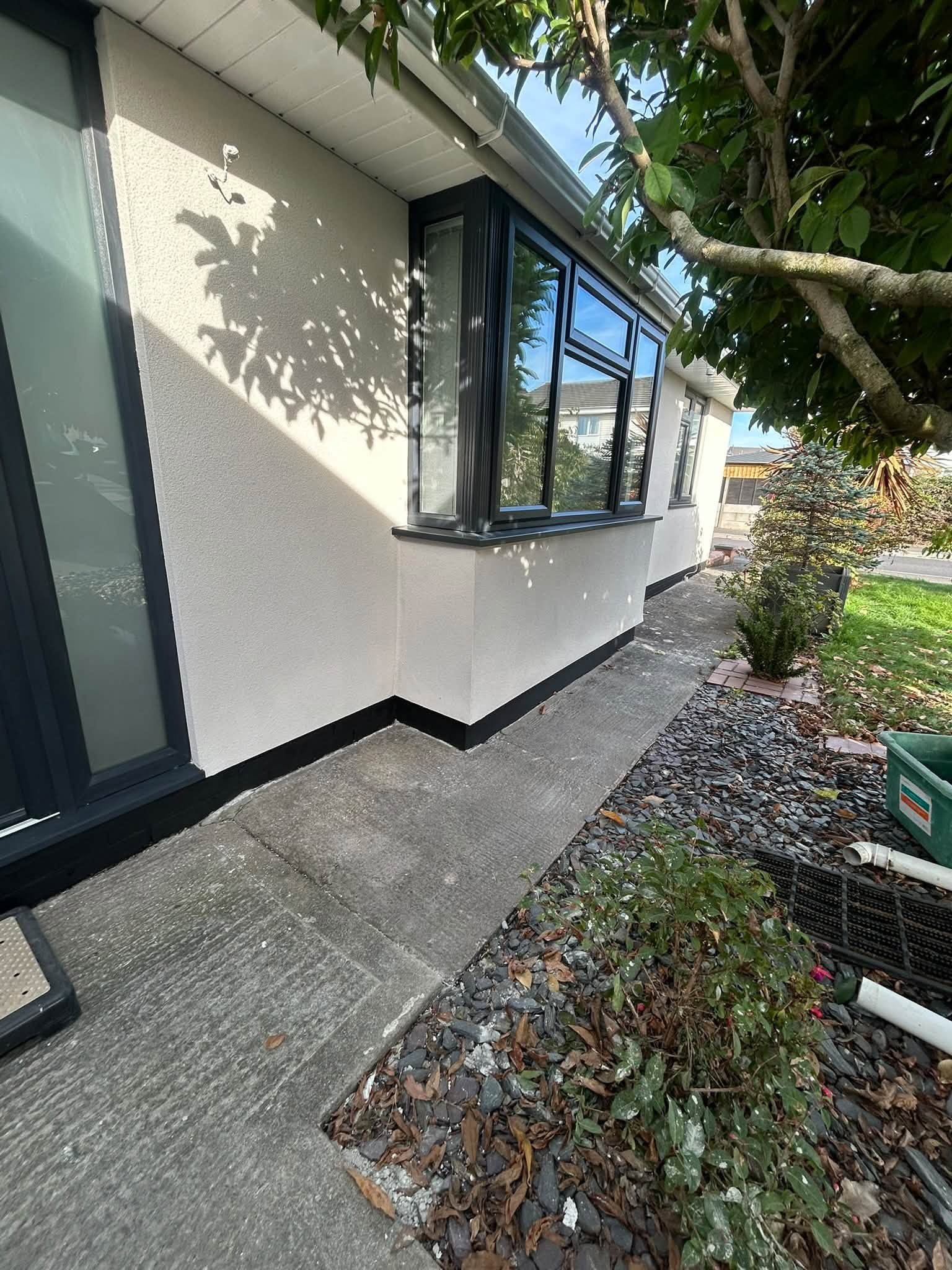
Lime render is the traditional way to render a solid-walled building, and it's often the right finish for an older home. Unlike cement-based render, lime is breathable: moisture that gets into an old wall can dry back out through it instead of being trapped behind a hard coat. External lime render is often key to saving a property's walls from the effects of time and neglect.
Why older walls suit lime
Many older houses, cottages and farmhouses around Somerset and Dorset have solid stone or brick walls with no cavity. A hard cement render on walls like these can hold damp in, crack and eventually come away. Lime is softer and more flexible, so it moves with the building and lets the walls breathe.
Taking off failed render
Where old render has cracked, blown or come away, we take it back to the stone or brick first, then re-render in lime. The new render is built up in coats, and each one is given the time it needs before the next goes on.
Natural and modern lime
We work with traditional natural lime as well as modern lime render systems, which keep lime's breathability with a more consistent finish. Lime cures more slowly than cement and needs protecting from frost, heavy rain and fast drying while it does, so we plan lime work around the weather rather than rushing it.
See it before you decide
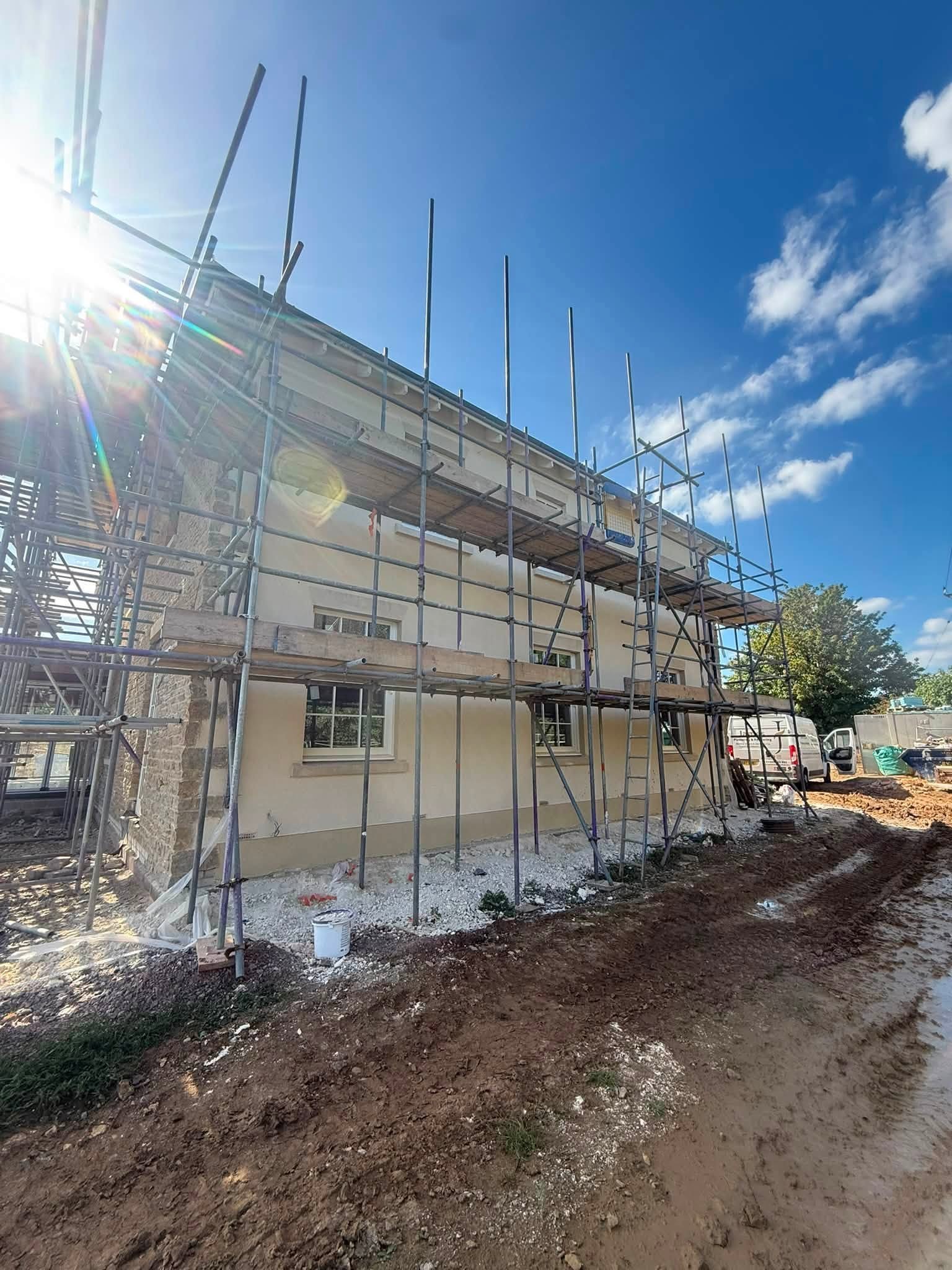
On new builds, self-builds and renovation projects we can apply sample panels on site, so you can compare lime render with other render systems, colours and textures in natural daylight before the full job starts.
Where we work
From our base in Bridgwater we apply lime render across Somerset and Dorset, including the older stone buildings around Yeovil and into Dorset, on period homes, cottages, renovations and new builds.